
Friday, June 28, 2019

Friday, March 18, 2016
Sejarah Ringkas Kesultanan Negeri Terengganu
Pengasas Kesultanan Terengganu hari ini ialah Sultan Zainal Abidin 1. Baginda ialah putera Tun Habib Abdul Majid (Bendahara Padang Saujana). Mengikut buku Tuhfat al-Nafis karangan Raja Ali Haji, Tun Zainal Abidin ditabalkan sebagai Sultan Terengganu oleh Daeng Menampuk (Raja Tua) di atas perintah Sultan Sulaiman Badrul Alam Shah. Sumber yang lain menyatakan Tun Zainal Abidin ditabalkan di atas takhta kerajaan Terengganu oleh Phra Nang Chau Yang, Raja Patani.
Mengikut Hikayat Johor Serta Pahang, Tun Zainal Abidin datang ke Patani setelah Paduka Raja Laksamana Wan Abdul Rahman dibunuh di Terengganu disekitar tahun 1688. Ketika berada di Patani, Tun Zainal Abidin dijadikan anak angkat oleh Raja Patani, Phra Nang Chau Yang.Tun Zainal Abidin menjadi Sultan Terengganu pada tahun 1708, berdasarkan duit kupang emas Terengganu yang mencatatkan nama Sultan Zainal Abidin 1 tidak lama bersemayam di Tanjung Baru, Kuala Berang, berpindah ke Kota Batang Mahang, Langgar dan Pulau Manis. Kemudian berpindah lagi ke Chabang Tiga, Kuala Terengganu dan akhirnya di kawasan berhampiran Bukit Keledang (Kota Lama).Sultan Zainal Abidin 1 digantikan oleh putera baginda, Ku Tana Mansur (Sultan Mansur I) pada tahun 1733, ketika berusia 7 tahun. Baginda memerintah Terengganu sehingga tahun 1794. Pada tahun 1739, Sultan Mansur Shah 1 berkahwin dengan Raja Bulang, anak Daeng Chelak, Yamtuan Muda Johor kedua. Berikutnya berkahwin pula dengan Raja Bakul, putera Sultan Sulaiman Badrul Alam Shah. Ketika menduduki takhta kerajaan Terengganu, Sultan Mansur 1 telah menghabiskan empat belas tahun (1746 - 1760) daripada masa pemerintahannya di Riau, terlibat dalam persaingan di antara orang Melayu dengan orang Bugis. Apabila pulang ke Terengganu pada 1760, baginda terlibat pula dalam politik Kelantan membantu Long Yunus (Yang DiPertuan Kelantan), putera Long Sulaiman ibni Long Bahar menduduki takhta kerajaan Kelantan pada tahun 1776.
Sultan Mansur digantikan oleh putera baginda Sultan Zainal Abidin II (1794 - 1808). Pada masa pemerintahan baginda, berlaku peperangan dengan Kelantan yang dipimpin oleh Long Muhammad ibni Long Yunus, Raja Kelantan. Terengganu dikalahkan dan seterusnya Kelantan berjaya membebaskan diri daripada naungan Terengganu. Seterusnya takhta kerajaan Terengganu diduduki oleh Sultan Ahmad (1808 - 1830), Sultan Abdul Rahman (1830), Sultan Daud (1830-1831), Sultan Mansur II (1831 - 1837), Sultan Muhammad (1837 - 1839), Baginda Omar (1839 - 1876). Baginda Omar pernah menduduki takhta kerajaan Terengganu pada tahun 1831 menggantikan Sultan Daud. Tetapi baginda diturunkan dari takhta kerajaan oleh Tengku Mansur dan seterusnya sebagai Sultan Mansur II. Sultan Mansur II digantikan oleh putera baginda, Sultan Muhammad. Pada tahun 1839, Baginda Omar berjaya mengalahkan Sultan Muhammad dan seterusnya menduduki takhta kerajaan Terengganu. Ketika pemerintahan baginda, Terengganu berkembang maju.
Apabila Baginda Omar mangkat, takhta kerajaan Terengganu diduduki oleh Sultan Ahmad Shah II (1876 - 1881). Sultan Ahmad Shah pula digantikan oleh putera baginda, Sultan Zainal Abidin III (1881 - 1918). Ketika pemerintahan baginda, British beberapa kali cuba melibatkan diri dalam kerajaan Terengganu.

Sultan Zainal Abidin III
Pada tahun 1911, Sultan Zainal Abidin III meluluskan Undang-Undang Bagi Diri Kerajaan Negeri Terengganu yang di antara lain menyatakan Sultan Yang DiPertuan Besar Terengganu memiliki kuasa kerajaan dan jajahan serta adalah ketua tertinggi kerajaan Terengganu. Seterusnya takhta kerajaan digantikan oleh Sultan Muhammad Shah II (1918 - 1920) dan Sultan Sulaiman Badrul Alam Shah (1920 - 1942).
Menurut Warta Cahaya Timor No.38 bertarikh 29 September 1942, apabila Sultan Sulaiman Badrul Alam Shah telah mangkat pada 26 September 1942, Tengku Ali, yang dirujuk sebagai putera sulong baginda telah dilantik sebagai "Pemangku Sultan Sementara" oleh pihak pentadbiran Jepun pada 29 September 1942. Seterusnya Tengku Ali telah diberikan gelaran "Sultan" pada 30 September 1942 oleh Gabenor Jepun. Walau bagaimanapun perlantikan ini dinyatakan tidak menurut Undang-Undang Diri Bagi Negeri Terengganu 1911.
- 1708 - 1733: Tun Zainal Abidin
- 1733 - 1794: Sultan Mansur I
- 1794 - 1808: Sultan Zainal Abidin II
- 1808 - 1830: Sultan Ahmad
- 1830: Sultan Abdul Rahman
- 1830 - 1831: Sultan Daud
- 1831 - 1837: Sultan Mansur II
- 1837 - 1839: Sultan Muhammad
- 1839 - 1876: Baginda Omar
- 1876 - 1881: Sultan Ahmad Shah II
- 1881 - 1918: Sultan Zainal Abidin III, putera Sultan Ahmad Shah II ;
- 1918 - 1920: Sultan Muhammad Shah II
- 1920 - 1942: Sultan Sulaiman Badrul Alam Shah
- 1942 - 1945: Tengku Ali
- 1945 - 1979: Sultan Ismail Nasiruddin Shah
- 1979 - 1998: Sultan Mahmud Al-Muktafi Billah Shah
- 1998 - kini: Sultan Mizan Zainal Abidin
Tengku Sri Paduka Raja, Tengku Ismail diisythiarkan sebagai Sultan Terengganu pada 16 Disember 1945. Baginda seterusnya ditabalkan pada tahun 1949 dengan gelaran Sultan Ismail Nasiruddin Shah. Sultan Ismail Nasiruddin dilantik sebagai Seri Paduka Baginda Yang DiPertuan Agong ke-6 dari 21 September 1965 hingga 20 September 1970. Dalam tempoh itu Duli Yang Teramat Mulia Tengku Mahmud dilantik sebagai Pemangku Raja Terengganu. Apabila Sultan Ismail Nasiruddin Shah mangkat pada tahun 1979, takhta kerajaan digantikan oleh putera baginda, Duli Yang Teramat Mulia Yang DiPertuan Muda Tengku Mahmud. Baginda menduduki takhta kerajaan Terengganu dengan gelaran Sultan Mahmud Al-Muktafi Billah Shah. Sultan Mahmud mangkat pada 15 Mei 1998 di Singapura. Dengan itu, takhta kerajaan Terengganu digantikan oleh putera baginda, Yang DiPertuan Muda Tengku Mizan.

Sultan Mizan Zainal Abidin
Friday, March 4, 2016
Negeri Sembilan History & Culture

Jelai and Kelang were brought together under his rule. Subsequent civil wars among the nine Malay chieftains resulted in the intervention of the British and in appointing a British Resident in 1895. Today Negeri Sembilan is still not ruled by a sultan but by the Yang Di pertuan Besar.
Culture
The Minangkabau brought along with them a rich cultural heritage which is still preserved and practised today as the fascinating ‘Adat Pepatih’, a matrilineal system of inheritance and administration that is unique to the State. A maritrilineal system is one where the wife is the head of the household and inheritance passes from the mother to the daughter. The Minangkabaus are divided into twelve suku or clans, and marriage between between members of the same clan is forbidden. The Minangkabau influence in the state can be found in dances and food as well.
Cuisine
Traditional Negeri Sembilan food is hot and spicy, as one of the ingredients used is the chili padi, the hottest of chillies. Popular dishes include rendang, (pieces of beef cooked in coconut milk and chillies). One should experience the unique Minangkabau style of cooking, which sees generous portions of 'chili padi' (small & extremely hot chilies) being used.
Another NS specialty is "Lemang", glutinous rice cooked in coconut milk in a bamboo stem over an open fire. This is normally served with Rendang, a deliciously thick, dry meat curry.
Dances
Negeri Sembilan also boasts traditional music like the Caklempong, Dikir Rebana, Tumbuk Kalang, and Bongai.
Even the musical instruments used bear some semblance to Sumatra, the ancestral home of the Minankabau people. Dances like the tarian lilin (candle dance) and rentak kuda (beat of the horse) are popular. Not to mention the beautifully coordinated graceful movements of the dancers in their colorful costumes in the captivating Tarian Piring and the upbeat tempo of Tarian Randai. Unlike modern dance, each beat, rhythm and movement in these dances combine to form a story, maybe of a bygone myth or simply a reflection of the lifestyles of another era.
They are usually performed at traditional festivities, cultural events and dinner-cum-cultural shows. The movements of the dance with the music pulsating, create a joyous air of fiesta and revelry among the celebrants and are often rhythmically alluring..
Negeri Sembilan Museum & Crafts and Culture Complex
(Taman Seni Budaya)
The complex consists of several buildings like the State Museum, Teratak Perpatih, Rumah Negeri Sembilan (Negeri Sembilan House), Top-Spinning Court as well as replicas of the Megaliths found in Pengkalan Kempas.

Location: In Jalan Labu, near the main exit from the North-South Expressway
to Seremban town centre
Entrance to the compex is free and the opening hours are:
Saturdays through Thursdays, 10am to 6pm
Fridays, 10am to 12.15pm and 2.45pm to 6pm
State Museum (formerly Ampang Tinggi Palace)
The State Museum building is a historical artefact in itself. The building was originally the Ampang Tinggi Palace, built in the year 1861 by Yam Tuan Imam Sri Menanti at Ampang Tinggi, Kuala Pilah. Later in 1980, this beautiful building was moved to its present location at the Arts and Culture Complex
This palace was originally built as a gift to Tunku Chindai, the daughter of the 5th Yang Di-Pertuan Besar of Negri Sembilan, when she married Tunku Muda Chik, the son of the 4th Yam Tuan, Yam Tuan Radin. Built without the use of any nails, this timber palace contains an unusual number of finely carved panels and a pair of heavy sliding doors.
Among others, this museum houses collections of artifacts from the Royal family such as artillery, copper and silver ware. The building overlooks a beautiful rectangular green lawn awhere you will find British and Malay-made canons referred to as the 'ekor lotong' and 'lela'.
Teratak Perpatih
Nearby, stands the Teratak Perpatih house, commanding a prominent presence in the complex. Its unique roof design, mimicking the two pointed ends of a buffalo's horns is typical of Minangkabau traditional house. Inside, you can find local crafts including porcelain, woodcraft and batik. Other exhibits available here include traditional musical instrument and Minangkabau costume.
Negeri Sembilan House
Yet another building found in this complex is the Negeri Sembilan House, originally built by a Malay prince in 1898 in Air Garam village in Mambau. Referred to as the 'Ghost House' (Rumah Berhantu) by local villagers, the interiors of this mysterious house is furnished with old furniture.
Monday, November 2, 2015
History of a Great Malay Warrior : Hang Tuah
Who is
Hang Tuah? A name that cannot be separated from the Malacca’s victorious
history since a long time ago. His historical name not only well known in Malacca but
also in Malaysia and South East Asia region.
Hang Tuah was a legendary Malay warrior who lived in Malacca during the
reign of Sultan Mansur Shah in the 15th century.

Considered
by many as a legend and a man with supernatural powers, Hang Tuah made a name
for himself as a great warrior during the Melaka Sultanate era. Together with
his four companions? Hang Jebat, Hang Kasturi, Hang Lekir and Hang Lekiu. The
five of them had been together all the times since their childhood.
It was
said that Hang Tuah’s parents, Dang Mahmud and Dang Merdu Wati, migrated from
Bentan to Malacca in their search of a better life where they finally settled down
at Kampung Duyung, Malacca. As a young boy, Hang Tuah worked as a woodcutter in
his parents’ shop. His grasp of spiritual concepts and potential as a fighter
were apparent from a young age.
During
the early days, Hang Tuah and his four friends embodied comradeship and stood
by each other by thick and thin. They even dug a well at their village which
came to be known as the Hang Tuah Well until today.
As they
grew older, Hang Tuah and his buddies learnt the Malay art of self-defence
(locally called as ‘Silat’) from a respected Tok Guru named Adiputra who lived
a hermetic life in a cave somewhere in a remote part at Gunung Ledang in Melaka.
They had been taught the arts of self-defense and meditation. With the skills,
all the five comrades helped in keeping the peace in Malacca.
The
turning point in Hang Tuah’s life came when he save the Dato’ Bendahara (chief
minister) from some men ran ‘amok’ in town. Dato Bendahara was amazed by the
courage of Hang Tuah and his companions. He rewarded them for their gallant and
presented them to Sultan of Malacca. When Sultan Mansor Shah (1456-1477) heard
about Hang Tuah’s bravery, Sultan had proudly awarded Hang Tuah the rank of Malacca
Admiral ‘Laksamana Melaka’ cum Syahbandar. His friends were also appointed to
be the Knights of Malacca.
Throughout the years, attending invitations
from foreign countries as far as China was the norm for the Sultan of Malacca
and Hang Tuah shall be constant aide to the Sultan on such visits. During the
sojourn to Majapahit, Taming Sari, a famous Majapahit warrior, had challenged
Hang Tuah for a duel. After a fiery fight, Hang Tuah finally emerged as the
winner and the Sultan of Majapahit bestowed Taming Sari’s Kris to Hang Tuah.
The Keris Taming Sari was named after its original owner and was purported to
be magical, empowering its owner with physical invulnerability.
Other responsibilities apart as ‘Laksamana’
and ‘Syahbandar’ of Malacca, Hang Tuah was always assigned to the task of being
the Sultan’s ambassador in fostering closer ties with allied
governments including China, India, Siam and Turkey.
According to Hikayat Hang Tuah, due to his loyalty
to the Sultan, Hang Tuah sailed to Inderaputra ( now is called ‘Pahang’) to
persuade Tun Teja, the princess of Inderapura to be the Queen of Sultan of
Malacca. Thinking that Hang Tuah himself would be marrying her, Tun Teja had
followed Hang Tuah on the way to Malacca. However, it was only during the voyage,
Hang Tuah had revealed the truth.
Hang Tuah’s popularity soon became the envy
of a few Malacca’s noblemen and this led to one of them, Pateh Karma Wijaya, to
create a story that Hang Tuah was having an affair with one of the palace’s
maid lady. Without further investigation, the Sultan had ordered Dato Bendahara
to carry out the death sentenced to Hang Tuah for the alleged offence. However,
Dato ‘Bendahara who know the truth, went against the Sultan’s orders and had hiddenly
located Hang Tuah somewhere in Ulu Melaka.
Believing that Hang Tuah was innocent and had
been sentenced to death, Hang Jebat decided to take a revenge on the death of his
beloved comrade, by first killing Dato Pateh Karma Wijaya. The Sultan was
unable to do anything as none of his warriors dared to challenge the ferocious
Hang Jebat. Only then Dato Bendahara finally revealed the secret to the Sultan
and told him that Hang Tuah was still alive. After hearing good news of that, Sultan
later instructed Hang Tuah to kill Hang Jebat, which he did after a long
grueling fight.
Another popular stories which was widely written
about Hang Tuah was his journey to
Gunung Ledang (Mount Ledang) at the Malacca-Johor border to ask for the hand of
the beautiful Princess of Mount Ledang for the Sultan’s wishes to be his Queen.
Having met the princess, Hang Tuah returned back to Malacca when she stated the
dowry or wedding gift which were include a Golden bridge linking Malacca and
the top of Mount Ledang, seven trays each of mosquitoes and germs liver, seven
jars of virgins’s tears and a bowl of Raja Ahmad’s blood(the Sultan’s son).
Hang Tuah was deeply disheartened when he
heard this, as he knew that the Sultan will not be able to fulfill the
conditions. Legend had stated that Hang
Tuah, who was overwhelmed by his disappointments, flung his kris into the
Malacca river and vowed only to return to Melaka if it resurfaced, which he
never did. He was finally vanished somewhere unknown.
However, it was not known how Hang Tuah died
but his body was said to be buried in Tanjung Kling, where his tomb can still
be seen until today.

The Tomb of Hang Tuah at Tanjung Kling, Malacca
Sunday, November 1, 2015
History of Kerapu Bank at Kota Bahru, Kelantan, Malaysia
Kerapu Bank is a historic building located on the downstream
of the Padang Merdeka, Kota Bharu, Kelantan. In 1912, the building was
completed and first used as a bank by ' The Mercatile Bank of India Ltd '. This
building was the first bank opened in Kelantan.
Kerapu Bank perched on top of a piece of land owned by a
local leader named Nik Yusoff bin Nik Abdul Majid. This building was also a
first building in Kelantan using brickstones. The building was known by the
locals in Kelantan as the Kerapu Bank building since s part of building’s surface
was cemented by using small bricks which had caused its surface rough and
sputter. During World War II, the Japanese secret police force had used the
building as their headquarters. The building was also being used as a prison,
interrogation centre, torture center and other violent activities. When the
Japanese surrendered and the British ruled the State, the building was used
again as a bank.

Building of Kerapu Bank nowadays
(Memorial World War II of Kelantan)
In 1977, the bank's name changed to 'The Hong Kong & Shanghai
Banking Corporation', and in 1981 the building was converted as Kelantan Art and
Handicrafts Gallery Hall. Later, since 1992 the building was used as a Memorial
World War II in Kelantan.
Starting in 1992, the building was used as a memorial of
World War II in which the Japanese military began landing in Malaya during World
War II. The building currently owns and displays more than 1000 exhibits
related to warfare consist of photographs, articles and artifacts. Other
exhibits include photos of Sultan Ismail Petra as the Honorary Colonel of the
Royal Artillery Regiment, history of Kelantan-Thai relationship before
independence era, the British people's life in Kelantan before and after the
war. The bicycle that was used by the Imperial Japanese army during the
invasions into Malaya during World War II is also displayed here.

Some of the displays which related to Japanese invasion into Malaya through Kota Bahru, Kelantan during World War II
Friday, October 30, 2015
Royal Town of Pekan, Pahang, Malaysia
Istana Pantai (Palace of Pantai)
• The first and the oldest Palace in the town.
• Built in the year 1826.

• At present, the palace was no longer exists.
• The location of the palace was near to the mosque of Sultan Abdullah in which the place is currently used as a burial site.
• Demolished during the construction of the mosque of Sultan Abdullah.
Istana Seri Terentang (Palace of Seri Terentang)
• Is the third oldest Palace in the town.
• Built in 1904 and completed in 1908.

• The name of the Palace was taken from a name of a tree locally called as ‘Terentang’ since the Palace area was surrounded by ‘Terentang’ trees.
• The design of the palace was from Tengku Mahmud’s mind himself.
• Have been demolished but there are still some relics exist which were surrounded by a beautiful garden.
Istana Leban Tunggal (Palace of Leban Tunggal)
• Built in 1935.
• Given the name as Leban Tunggal because the area just had been grown up by a single ‘Leban’ tree only.
• The palace was made of a mixture of stone and wood and it was a two storeys building with two domes in its right and left.
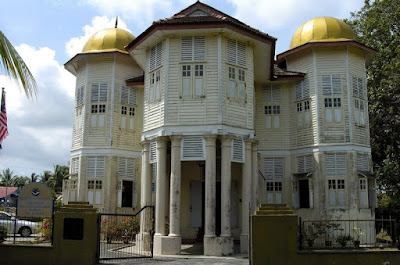
• Its wonderful architecture still remains to today.
• Now it serves as the District Town Library.
Istana Permai (Palace of Permai)
• Built in the 1930s during the reign of Sultan Abu Bakar.
• Built to replace the Palace of Seri Terentang who had been demolished.
• According to the oral stories, its design much looks alike the British High Commission Building in Kuala Lumpur.
• Currently, the Palace of Permai has been used as the official stay of Acting Sultan of Pahang while in Pekan.
Istana Saadah (Palace of Saadah)
• Built in 1938 by Dato ' Sang Melewar (Dato ' Mangku Kuning).
• It was a residence of Cik Siti Nah which was one of the maid of Sultan Abu Bakar.
• Located at Kampung Masjid.
• Became the administration centre of the State during the reign of Sultan Abu Bakar.
• Its architectures are still remaining unchanged until today.
• Now it becomes the Perch Palace after the death of Cik Siti Nah in 1984.
Istana Kota Beram (Palace of Kota Beram)
• Located in historic sites.
• It was not known when the construction began.
• Currently left as the British Resident building.
• In 1929, this two-sided wooden house has been replaced with a two-sided brick houses.
• In 1948, it was taken over by Sultan Abu Bakar as to replace the Palace of Seri Terentang as his official Palace.
• Sultan Abu Bakar gave the name of the palace as Palace of Kota Beram.
• In 1954, the Government had built an additional building connected to this Palace and forth being converted as Balai Rong Seri.
• Serve as a meeting place and royal events until 1959.
• Now the Palace of Kota Beram have been converted into a Museum as proposed by the Government and his Majesty's Royal Highness Sultan Haji Ahmad Shah Al-Musta'in Billah ibni Almarhum Sultan Abu Bakar Riayatuddin Al-Muadzam Shah, DK, SIMP., DMN, DK (Silver), DK (Johor), DK (Kelantan), SPCM, SPMJ, Sultan of Pahang Ruler King officiated its opening on Saturday 21 October 1976 which equals to 27 Syawal 1396.
Istana Abu Bakar (Palace of Abu Bakar)
• Built in 1965 and completed in 1974.
• Given the name in conjunction with the name of the late king of Pahang, Al-Marhum Sultan Abu Bakar.
• It was built to replace the Palace of Permai.
• Its position near to the palace site of Palace of Seri Terentang.
• Its modern design architecture was designed by the Chinese architects.

• Now the Palace of Abu Bakar is still being used the official palace of stay of Sultan Haji Ahmad Shah, Sultan of Pahang.
• The first and the oldest Palace in the town.
• Built in the year 1826.

Palace of Pantai
• At present, the palace was no longer exists.
• The location of the palace was near to the mosque of Sultan Abdullah in which the place is currently used as a burial site.
• Demolished during the construction of the mosque of Sultan Abdullah.
Istana Seri Terentang (Palace of Seri Terentang)
• Is the third oldest Palace in the town.
• Built in 1904 and completed in 1908.

Palace of Seri Terentang
• The name of the Palace was taken from a name of a tree locally called as ‘Terentang’ since the Palace area was surrounded by ‘Terentang’ trees.
• The design of the palace was from Tengku Mahmud’s mind himself.
• Have been demolished but there are still some relics exist which were surrounded by a beautiful garden.
Istana Leban Tunggal (Palace of Leban Tunggal)
• Built in 1935.
• Given the name as Leban Tunggal because the area just had been grown up by a single ‘Leban’ tree only.
• The palace was made of a mixture of stone and wood and it was a two storeys building with two domes in its right and left.

Palace of Leban Tunggal
• Its wonderful architecture still remains to today.
• Now it serves as the District Town Library.
Istana Permai (Palace of Permai)
• Built in the 1930s during the reign of Sultan Abu Bakar.
• Built to replace the Palace of Seri Terentang who had been demolished.
• According to the oral stories, its design much looks alike the British High Commission Building in Kuala Lumpur.
• Currently, the Palace of Permai has been used as the official stay of Acting Sultan of Pahang while in Pekan.
Istana Saadah (Palace of Saadah)
• Built in 1938 by Dato ' Sang Melewar (Dato ' Mangku Kuning).
• It was a residence of Cik Siti Nah which was one of the maid of Sultan Abu Bakar.
• Located at Kampung Masjid.
• Became the administration centre of the State during the reign of Sultan Abu Bakar.
• Its architectures are still remaining unchanged until today.
• Now it becomes the Perch Palace after the death of Cik Siti Nah in 1984.
Istana Kota Beram (Palace of Kota Beram)
• Located in historic sites.
• It was not known when the construction began.
• Currently left as the British Resident building.
• In 1929, this two-sided wooden house has been replaced with a two-sided brick houses.
• In 1948, it was taken over by Sultan Abu Bakar as to replace the Palace of Seri Terentang as his official Palace.
• Sultan Abu Bakar gave the name of the palace as Palace of Kota Beram.
• In 1954, the Government had built an additional building connected to this Palace and forth being converted as Balai Rong Seri.
• Serve as a meeting place and royal events until 1959.
• Now the Palace of Kota Beram have been converted into a Museum as proposed by the Government and his Majesty's Royal Highness Sultan Haji Ahmad Shah Al-Musta'in Billah ibni Almarhum Sultan Abu Bakar Riayatuddin Al-Muadzam Shah, DK, SIMP., DMN, DK (Silver), DK (Johor), DK (Kelantan), SPCM, SPMJ, Sultan of Pahang Ruler King officiated its opening on Saturday 21 October 1976 which equals to 27 Syawal 1396.
Istana Abu Bakar (Palace of Abu Bakar)
• Built in 1965 and completed in 1974.
• Given the name in conjunction with the name of the late king of Pahang, Al-Marhum Sultan Abu Bakar.
• It was built to replace the Palace of Permai.
• Its position near to the palace site of Palace of Seri Terentang.
• Its modern design architecture was designed by the Chinese architects.

Palace of Abu Bakar
• Now the Palace of Abu Bakar is still being used the official palace of stay of Sultan Haji Ahmad Shah, Sultan of Pahang.
Thursday, October 29, 2015
Old Palace & Houses of Terengganu at Pura Tanjung Sabtu
Not only
rich in its natural beauty, but it also keep an array of histories that had
ripped a variety of questions that play in our minds. The most obvious history that
we could see is about the existence of the Terengganu Inscription Stone (locally called as Batu Bersurat Terengganu) found in Kuala Berang, Terengganu that had answered most of the questions
related to the usage of Jawi writings in Malaysia.

Besides of
the Terengganu Inscription Stone (i.e. Batu Bersurat), another historical which
have yet to be explored by the younger generations now are Pura Tanjong Sabtu.
Pura Tanjong Sabtu is approximately 14 km from the city of Terengganu. Pura Tanjong
Sabtu is a complex that places a number of houses and traditional Malay Palace
of Terengganu. It was understood that the houses and the Palace were erected almost
100 years to 200 years ago.

The Pura Balai or Reception Hall of Rumah Seberang Baruh
The old
houses were taken from the Kampung Atas Tol, Kampung Seberang Baruh, Kampung
Sungai Rengas and Kampung Nesan Empat. While the Palace was taken from Kampung
Dalam Kota (behind the Maziah’s Palace). These houses have been rebuilted in 1992
and have been overhauled as homestays in 1995.
Pura Tanjong Sabtu got its name as a result of a combination of the
sanskrit words ' Pura ' which means palaces, temples or city and ' Tanjung
Sabtu ' was a village’s name was built by the nobles palace . The
explanation went on as " Pura
Tanjung Sabtu, a complex of centuries-old Terengganu Malay timber houses
reassembled , restored and preserved in the style of a princely palace of 18th
century Terengganu. It is a private residence of Tengku Ismail bin Tengku Su,
which is now open to paying guests who would like to experience the courtly
living of Terengganu's
past.

If you visit
to Pura Tanjong Sabtu, you'll see the uniqueness and the fineness of Malay
traditional architecture in the manufacture of houses a long time ago. Houses were
built with full use of the wood and were built approximately 3 m from the ground so
as to prevent their houses from flooding and wild animals.
These houses
were built without the use of nails but using the pegs. Even though the nails
were not being used, these houses are still standing strong until today. The traditional
houses with airy veranda. The grounds are for different purpose. The two houses
are attached to each other where you can walk from veranda to veranda. The roofs
are unique in design. This has proved that the old society here had the
creativity in the field of carpentry.

Pura Tanjung Sabtu (Google Map View)
If you are
in Terengganu, Tanjung Pura Sabtu is a must place to visit in which it helps
you to understand the history of art of the Malay heritage. Experience
overnight Homestay Pura Tanjong Sabtu, which gives the concept of the beautiful
village atmosphere and it will be fascinating.
Note: Pura Tanjung Sabtu “Nominated For
Aga Khan Award For Architecture 2007”
Wednesday, October 28, 2015
History of Bukit Besi, Dungun, Terengganu, Malaysia
Bukit Besi (Iron Hill) is a small town that can be found in the
District of Dungun, Terengganu, Malaysia. Bukit Besi was formerly known as iron
ore mining areas and the area are rich with natural resources of iron ore.

How Bukit Besi got its name? An opinion expressed, the
story began with the discovery by some local residents who went into the forest
to find rattan. During their journey, they decided to take a rest and having their meals brought together with
them.
One of them
saw a large and medium stones suitable for seating. He decided to lift the
stone. However, his intention had been cancelled since the stone turned out to
be very heavy. Some of them were also tried to lift the stones but still yet failed.
Then one of them suggested naming the places with the name Bukit Besi and it
remains until today.
While the
history of the iron ore mining activities in Bukit Besi began when a Geologist
from Japan, Mr. Kuhara came to Cemuak, Ulu Dungun in 1916. He discovered there
was a large amount of iron ore contents in the area. Initially, iron ore
transported using wheelbarrows from Bukit Besi to Kampung Dendang. Then it was taken to Dungun
by boats. Kuhara Mining Ltd Company then
informally to take solely responsible on the operation of mining ores since
1927.
The company
later changed its name to Nippon Mining Company (NMC). ' Mining Lease ' grant was
released by the Terengganu’s Government to NMC on 13 January 1929. The area is
about 360 hectares, comprising M.L. 129, M.L. 130, M.L. 131 and M.L. 132 were
the fractions of M.L. 75, in which the area has been endowed by the Sultan of
Terengganu to his Royal Family, Tengku Abu Bakar Tengku Abdul Jalil.
In 1930, Dungun-Bukit
Besi railway route were established at Che ' Lijah Station. ‘Stock Pile ' or the
first place of unloading the ore was also at Kampung Che ' Lijah. From there
the iron ore were loaded onto the boats and then to be taken to Kuala Dungun. In 1935, the
population of Bukit Besi had increased up to 6000 persons (including 3000
employees). The income of Bukit Besi’s residents during that time were also very
luxurious.


Public
services such as water supply, electricity, train services were also provided
free of charge. A tunnel known as Bukit Tebuk had also been completed in 1936.
Travelling through Bukit Tebuk’s tunnel had saved much time. Therefore the
place of unloading ore from Che Lijah was transferred to Nibong, and later
transferred to Sura. Iron ore production by NMC reached its climate between
1936 till 1940.

Tunnel of Bukit Tebuk
After that
the production was slowly dropped down and ended in 1945. That was after the
Japanese surrendered to British in World War II. There were no mining
activities carried out around 1946-1949 due to the state of emergency and no
demand. The British Government had sold
the mines property of Bukit Besi to the Eastern Mining and Metal Company
(EMMCO).
EMMCO had initiated
its activities on a large scale in the early 1950s, due to the high demand from
companies in Japan. To obtain large profits in a short time, EMMCO had doubled the
production of ore. Production activities were carried out 24 hours a day
non-stop, except for Friday. Modern machines had also been used in the process of breaking ore rocks. As a result, the company had managed to increase
production and produce a better quality iron ore, besides of increasingly
massive profit.

Peak
production was between 1960 until 1964 where the total of production exceeding
2,000,000 tonnes per year. On 1st October 1970, the EMMCO Board of Directors finally
had decided to close Bukit Besi’s mine. There were various factors that led to
the closure of the iron ore mines. Nevertheless ore contents was believed to be
still exist there. The closure of the iron ore mines was affecting the economy
and the lives of the residents of Bukit Besi and Dungun. Many of them had
migrated to other places, finding other jobs.
Tuesday, October 27, 2015
Bukit Puteri (i.e.Puteri Hill) Terengganu, Malaysia
PUTERI HILL (locally known as BUKIT PUTERI) that heading
towards Kuala Terengganu River and the South China Sea had been witnessed the
history of urban development. Its strategic location makes this significant
area of hills in ancient times as a center of control for the Terengganu’s government
and defense.

Puteri Hill
The original name Bukit Puteri is not undetectable but in the history of Terengganu have stated that Bukit Puteri has been around since the 1st century. This proves the importance of this place to the Terengganu Government to face enemies from the outside, especially the threats that were coming from the sea direction.
During the reign of Sultan Mansur II (1831-1836), Sultan
Mahmud I (1836-1839) and Sultan Umar (1839-1876) Bukit Puteri has become a fortification
Fort during civil war occurred at that time. It covers an area of 0.688
hectares and its approximately 200meter in height. On top of the hill there is also a Flag Pole for
the Royal flag being raised during royal
festival days. The Flag Pole began to be installed in the year 1899 during the
reign of Sultan Zainal Abidin III. The pole is about 18 metres height and bottom of the pole
was buried under the ground about 2
metres in depth. However the current Flag Pole is not original pole but which
was built during the reign of Sultan Sulaiman Badrul Alam Shah.
At the bottom of the Flag Pole, there is seems like a stone
caves room being built underground. It
is likely a place to keep bullets and ammunitions in the past. Next to it there
is a King’s throne room that act as a control centre. On top of the Hill is also a pillar of fire
or the lighthouse as marked for ships at sea.
Now that there are several cannons being left on ground unattended
and some have been transferred to several places in Kuala Terengganu town and
also to the Istana Badariah as decoration.
The cannons there mostly made by Portuguese, Spanish and some even made
by the Malays themselves. Between the names of the cannon that ever being
placed at Bukit Puteri are Sri Johor, Sri Laila Majnun, Sri Buih and Sri
Jamlor.

Cannons at Puteri Hill

Fort at Puteri Hill
Another relic
of history is that there is a Large Bell (locally called as Genta Besar)
located on the Hill. This Bell is always there since previous Royal rulers era
long time ago. If damaged, it will be replaced with a new Large Bell. The
current Large Bell is made during the reign of Sultan Zainal Abidin III which
is approximately in the year 1908. The
Bell weighs 175 kilograms and was made using yellow brass by a craftsman named
Wan Ali Wan Awang who is being assisted by a number of other craftsmen from
Kampung Tanjung and Kampung Paya, Kuala
Terengganu.
The purpose
of this Large Bell to spread instant
signal to the public of any disaster or threats happen such as the violation of
enemies, fire etc. This Bell was hammered aloud for allowing the civilians to
get ready in facing any possibilities.

Large Bell (Genta Besar)
At present, Bukit Puteri is still a great monumental in Terengganu standing
beside Palace of Maziah in sight, keeping a variety of ancient history and
secrets, the greatness of a State Government
Terengganu Darul Iman. In addition, Bukit Puteri is become one of the
tourist attractions in Terengganu and it is placed under the care of the State
Museum.
The Director
of the Museum of Terengganu Mr Mohd Yusof Abdullah says that the Hill is a full
of historic events since it used happened to be a fort and was once the cause of the civil war
race during the upheavals of the
Terengganu Sultanate between 1931 to 1939. ‘Various relics are still clearly visible
in Bukit Puteri among throne room, the cannons, Large Bell, Flag Pole and
lighthouse. ' In fact, tourists can also see the fort that was built by themselves
using sand, egg whites, lime, shells, honey bees and still strong despite ages
almost decades old.
Bukit Puteri,
the size of 0.688 hectares, is located in the vicinity of Kuala Terengganu town
and near the mouth of Terengganu River with a height of approximately 200 meters
above sea level. Mr Mohd Yusof also said that the Hill is located at the
strategic assets nearby close to the historic building such as Abidin Mosque,
Palace of Maziah apart near the Pasar Besar Kedai Payang and a Post Office in
Kuala Terengganu.
There are
also interesting stories from local villagers about Bukit Puteri. Some of the
old folks claimed that Bukit Puteri was used to be the residence of fairies
(locally called as Orang Bunian). At the earlier time, the villagers used to
come to Puteri Hill to borrow variety of dishes such as tableware for weddings
or parties. As a consequence of not return back the borrowed dishes, the
Fairies Princess has sulk and disappeared from Bukit Puteri until now.
Monday, October 26, 2015
Keledang Hills (Bukit Keledang), Terengganu, Malaysia
Keledang Hills (i.e. Bukit Keledang) on the outskirts of Terengganu River has now become a new tourism icon state after the National Heritage
Department had commissioned the area as one of the historic heritage sites in
Malaysia. It is located near to the Seri Malaysia Hotel that ease the visitors to come here for
overnight rest if necessary.

During interview session by the Utusan Malaysia's newspaper reporter previously, Terengganu State Museum Director, Mr Mohd Yusof Abdullah
said such recognition not only promoting the hill name in terms of history but
also make it an important asset of national tourism. Consequently, the
maintenance of the hill under the eye of the National Heritage Department,
while grass and other aspects of care are supervised by the State Museum.

Mr Mohd Yusof also said,
Keledang Hill was used to serve as a merchant base for Keledang traders from Hulu
Terengganu river in the 18th
century. He said, at the top of the Hill
was the location of the first rule of the
Sultan of Terengganu, Sultan Zainal Abidin I (1708-1733M). He had built a
Palace and a city known as Kota Lama. At
Kota Lama, Sultan Zainal Abidin 1 had carried out the rule and administration
until his death. His funeral was buried on the Hill.

Sultan Zainal Abidin 1 Mausoleum, Keledang Hill
The tomb of Nang Zainab (Cik Puan Besar), Queen of Sultan Zainal Abidin II, State Officials and other Royal relatives are also among the Mausoleum preserved here. Others include several ancient tombs, located at the top of the Hill, mostly broken and unidentified.

Meanwhile, the Royal Mausoleum Guardian of Keledang Hill, Mr Abdullah Said, 58, said the Royal Mausoleum at Bukit Keledang was fully respected because it was the former place of Kota Lama that became the location of the reign of Sultan Zainal Abidin 1 after migrating from Hulu Terengganu.
Reference Source: Utusan Malaysia Archieve & Wikipedia

Tomb of Nang Zainab (Cik Puan Besar), Queen of Sultan Zainal Abidin II. Keledang Hill
Meanwhile, the Royal Mausoleum Guardian of Keledang Hill, Mr Abdullah Said, 58, said the Royal Mausoleum at Bukit Keledang was fully respected because it was the former place of Kota Lama that became the location of the reign of Sultan Zainal Abidin 1 after migrating from Hulu Terengganu.
Reference Source: Utusan Malaysia Archieve & Wikipedia
Fort Cornwallis, Penang
Fort Cornwallis was named after Governor-General of Bengal
in the end of 1700 century, Charles Cornwallis. It became one of the landmarks
in Georgetown, Penang. Fort Cornwallis is located near the Esplanade, adjacent
to the Victoria Memorial Clock.

The Fort walls as high as approximately 10 feet was built in
the form of stars. The travel around this fortress takes about 10 minutes. In
this Fort, you can see the remaining of the old structure built in the past
centuries such as a chapel, prisons, keeping weapons area, lighthouse lamps
that had been used to warn ships, flags and some the old bronze cannons which
one of them is a Dutch cannon, known as Seri Rambai, dated 1603. Some
interesting information regarding the Seri Rambai Cannon is that some locals
believe it can provide positive effects on the fertility of women.

This historic place that being managed privately are popular
among the visitors. It is equipped with a tourist information kiosk, a café, Open
Hall, Historical Gallery, Souvenir Centre as well as tourist guides that can
bring you visiting Fort area while giving descriptions of its history.

Statue of Sir Francis Light
Kellie Castle
History
William Kellie Smith was from a village in Scotland known as Kellas (I do not know whether the village is still exist at Scotland nowdays…hope still there). He was born on 1st March 1870 from farmer family and third from 5 siblings. In 1890, at the age of 20, he arrived at Malaya (now it calls Malaysia), he met an estate owner called Charles Alma Baker, who had won concessions from the state government to clear 360 hectares of forests in Perak. With the substantial profits made from his business venture with Charles Alma Baker, Smith started planting rubber trees and dabbled in the tin mining industry. In time, he became the owner of Kinta Kellas Estate and the Kinta Kellas Tin Dredging Company.


Now with fortune made,in 1903 he had returned home to visit his ill-beloved mother and forth to marry his Scottish sweetheart, Agnes and brought her to Malaysia in 1903. When he returned back to Malaya, he decided to put 'Kellie' to after his name as a memorial upon his mother.The following year, the couple was blessed with a daughter whom they named Helen. William Smith desperately wanted a son and heir to take over his empire in the Malay Isles. After many years, Agnes finally gave birth to a son in 1915. He named his first son as Anthony.The birth of Anthony was the start of even greater success for William Smith. To celebrate Anthony’s birth, William Smith decided to expand on his mansion. Smith started planning for a huge castle which he planned to call Kellas House, after his hometown in Scotland.
William Smith had hired 70 workers taken from Madras, India and most of the building materials were imported from India and tiles imported from Italy. The architecture of the castle is so unique at that time (i.e. Greco-Roman Moorish India concept) in which cannot be found at any other places in Malaya.
For your information, Kellie's Castle also had ever being reported in one of English's newspaper in London (i.e. London Financier) on 15 September 1911.
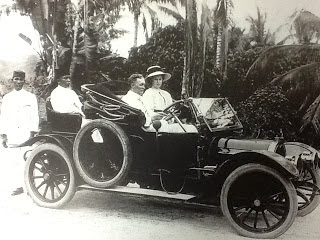
According to the original layout of the castle, it had 14 rooms and rooms for his family located at the first floor of the castle in which each rooms have emergency stairs exit. The castle was said to have 3 secret tunnels. First tunnel was built 500 metres toward a Hindu's temple, second tunnel toward to his family's car (Marlborough shown as in the picture above) and the third tunnel is remains unknown to where it goes.
The first and second tunnel were already being known since the castle being left abandoned long time ago. But the third tunnel was accidently being found recently on 2003 during the contruction of KM4 highway Gopeng-Batu Gajah Road by the Malaysia government.
The construction of the castle started to be in delay when the First World War begun. And then not long after that, there was a disease known as 'Spanish Flu' started from Europe and eventually reached Asia and India. The disease was finally arrived at Malaya through the workers brought from India. The disaster had caused a tremendous trouble to William in order to complete the building of his castle. All of his 70 workers died due to this disaster.
In 1926, William and his daughter Helen went to Lisbon, Portugal before they continued their journey to England to visit his wife, Agnes and his son, Anthony. Some also said that William Kellie went back to England because he want to bring back a lift set to be fitted at his castle's tower. Unfortunately, during in Portugal, William had been infected with lung disease called as pneumonia and finally died at Lisbon on 11 Disember 1926 at the age of 56 years old.
Construction of Castle abandoned
After his husband died, Agnes left Malaya and had sold all their properties including Kellie's Castle. Farms owned by Kellie had been sold to Harrisons and Crosfield Company. The construction of the castle was finally stopped since 1926 till nowadys.
Heir of William Kellie Smith
Not much information that could find but referring to website (http://www.thepeerage.com/) under "The Peerage: A genealogical survey of the peerage of britain as weel as the royal families of Europe", his son Anthony William Kellie-Smiths had used to be with Britain'army during World War 2 and later died on 9 June 1942 when he was a Lieutenant. Anthony's son, David Anthony Kellie-Smith were born on 4 June 1940 and two grandsons, Samuel Anthony Kellie-Smith (born on 12 May 1966) and Owen William Kellie-Smith (born on 20 July 1968). On Kellie's daughter side, Helen, his heir were not detectable.
Below are some photos taken during my visit previously:


William Smith had hired 70 workers taken from Madras, India and most of the building materials were imported from India and tiles imported from Italy. The architecture of the castle is so unique at that time (i.e. Greco-Roman Moorish India concept) in which cannot be found at any other places in Malaya.
For your information, Kellie's Castle also had ever being reported in one of English's newspaper in London (i.e. London Financier) on 15 September 1911.

According to the original layout of the castle, it had 14 rooms and rooms for his family located at the first floor of the castle in which each rooms have emergency stairs exit. The castle was said to have 3 secret tunnels. First tunnel was built 500 metres toward a Hindu's temple, second tunnel toward to his family's car (Marlborough shown as in the picture above) and the third tunnel is remains unknown to where it goes.
The first and second tunnel were already being known since the castle being left abandoned long time ago. But the third tunnel was accidently being found recently on 2003 during the contruction of KM4 highway Gopeng-Batu Gajah Road by the Malaysia government.
The construction of the castle started to be in delay when the First World War begun. And then not long after that, there was a disease known as 'Spanish Flu' started from Europe and eventually reached Asia and India. The disease was finally arrived at Malaya through the workers brought from India. The disaster had caused a tremendous trouble to William in order to complete the building of his castle. All of his 70 workers died due to this disaster.
In 1926, William and his daughter Helen went to Lisbon, Portugal before they continued their journey to England to visit his wife, Agnes and his son, Anthony. Some also said that William Kellie went back to England because he want to bring back a lift set to be fitted at his castle's tower. Unfortunately, during in Portugal, William had been infected with lung disease called as pneumonia and finally died at Lisbon on 11 Disember 1926 at the age of 56 years old.
Construction of Castle abandoned
After his husband died, Agnes left Malaya and had sold all their properties including Kellie's Castle. Farms owned by Kellie had been sold to Harrisons and Crosfield Company. The construction of the castle was finally stopped since 1926 till nowadys.
Heir of William Kellie Smith
Not much information that could find but referring to website (http://www.thepeerage.com/) under "The Peerage: A genealogical survey of the peerage of britain as weel as the royal families of Europe", his son Anthony William Kellie-Smiths had used to be with Britain'army during World War 2 and later died on 9 June 1942 when he was a Lieutenant. Anthony's son, David Anthony Kellie-Smith were born on 4 June 1940 and two grandsons, Samuel Anthony Kellie-Smith (born on 12 May 1966) and Owen William Kellie-Smith (born on 20 July 1968). On Kellie's daughter side, Helen, his heir were not detectable.
Below are some photos taken during my visit previously:

View from right side of the Castle

Old building structure behind the Castle
(Kellie's First Home Named as Kellas House)

Kellie Smith's Kitchen
(Oven Made of Bricks)
Last and foremost, the scary parts:

Re-Write the Signboard Statement as below
Ghostly Cloister Balcony
William Kellie Smith died of pneumonia in Lisbon, Portugal and was buried in the British Cemetery. Nevertheless, it is said that his spirit roams at night, especially along the corridors, guarding his great mansion.
Subscribe to:
Posts (Atom)