
History
William Kellie Smith was from a village in Scotland known as Kellas (I do not know whether the village is still exist at Scotland nowdays…hope still there). He was born on 1st March 1870 from farmer family and third from 5 siblings. In 1890, at the age of 20, he arrived at Malaya (now it calls Malaysia), he met an estate owner called Charles Alma Baker, who had won concessions from the state government to clear 360 hectares of forests in Perak. With the substantial profits made from his business venture with Charles Alma Baker, Smith started planting rubber trees and dabbled in the tin mining industry. In time, he became the owner of Kinta Kellas Estate and the Kinta Kellas Tin Dredging Company.


Now with fortune made,in 1903 he had returned home to visit his ill-beloved mother and forth to marry his Scottish sweetheart, Agnes and brought her to Malaysia in 1903. When he returned back to Malaya, he decided to put 'Kellie' to after his name as a memorial upon his mother.The following year, the couple was blessed with a daughter whom they named Helen. William Smith desperately wanted a son and heir to take over his empire in the Malay Isles. After many years, Agnes finally gave birth to a son in 1915. He named his first son as Anthony.The birth of Anthony was the start of even greater success for William Smith. To celebrate Anthony’s birth, William Smith decided to expand on his mansion. Smith started planning for a huge castle which he planned to call Kellas House, after his hometown in Scotland.
William Smith had hired 70 workers taken from Madras, India and most of the building materials were imported from India and tiles imported from Italy. The architecture of the castle is so unique at that time (i.e. Greco-Roman Moorish India concept) in which cannot be found at any other places in Malaya.
For your information, Kellie's Castle also had ever being reported in one of English's newspaper in London (i.e. London Financier) on 15 September 1911.
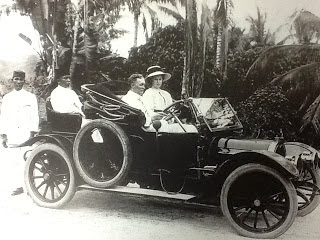
According to the original layout of the castle, it had 14 rooms and rooms for his family located at the first floor of the castle in which each rooms have emergency stairs exit. The castle was said to have 3 secret tunnels. First tunnel was built 500 metres toward a Hindu's temple, second tunnel toward to his family's car (Marlborough shown as in the picture above) and the third tunnel is remains unknown to where it goes.
The first and second tunnel were already being known since the castle being left abandoned long time ago. But the third tunnel was accidently being found recently on 2003 during the contruction of KM4 highway Gopeng-Batu Gajah Road by the Malaysia government.
The construction of the castle started to be in delay when the First World War begun. And then not long after that, there was a disease known as 'Spanish Flu' started from Europe and eventually reached Asia and India. The disease was finally arrived at Malaya through the workers brought from India. The disaster had caused a tremendous trouble to William in order to complete the building of his castle. All of his 70 workers died due to this disaster.
In 1926, William and his daughter Helen went to Lisbon, Portugal before they continued their journey to England to visit his wife, Agnes and his son, Anthony. Some also said that William Kellie went back to England because he want to bring back a lift set to be fitted at his castle's tower. Unfortunately, during in Portugal, William had been infected with lung disease called as pneumonia and finally died at Lisbon on 11 Disember 1926 at the age of 56 years old.
Construction of Castle abandoned
After his husband died, Agnes left Malaya and had sold all their properties including Kellie's Castle. Farms owned by Kellie had been sold to Harrisons and Crosfield Company. The construction of the castle was finally stopped since 1926 till nowadys.
Heir of William Kellie Smith
Not much information that could find but referring to website (http://www.thepeerage.com/) under "The Peerage: A genealogical survey of the peerage of britain as weel as the royal families of Europe", his son Anthony William Kellie-Smiths had used to be with Britain'army during World War 2 and later died on 9 June 1942 when he was a Lieutenant. Anthony's son, David Anthony Kellie-Smith were born on 4 June 1940 and two grandsons, Samuel Anthony Kellie-Smith (born on 12 May 1966) and Owen William Kellie-Smith (born on 20 July 1968). On Kellie's daughter side, Helen, his heir were not detectable.
Below are some photos taken during my visit previously:


William Smith had hired 70 workers taken from Madras, India and most of the building materials were imported from India and tiles imported from Italy. The architecture of the castle is so unique at that time (i.e. Greco-Roman Moorish India concept) in which cannot be found at any other places in Malaya.
For your information, Kellie's Castle also had ever being reported in one of English's newspaper in London (i.e. London Financier) on 15 September 1911.

According to the original layout of the castle, it had 14 rooms and rooms for his family located at the first floor of the castle in which each rooms have emergency stairs exit. The castle was said to have 3 secret tunnels. First tunnel was built 500 metres toward a Hindu's temple, second tunnel toward to his family's car (Marlborough shown as in the picture above) and the third tunnel is remains unknown to where it goes.
The first and second tunnel were already being known since the castle being left abandoned long time ago. But the third tunnel was accidently being found recently on 2003 during the contruction of KM4 highway Gopeng-Batu Gajah Road by the Malaysia government.
The construction of the castle started to be in delay when the First World War begun. And then not long after that, there was a disease known as 'Spanish Flu' started from Europe and eventually reached Asia and India. The disease was finally arrived at Malaya through the workers brought from India. The disaster had caused a tremendous trouble to William in order to complete the building of his castle. All of his 70 workers died due to this disaster.
In 1926, William and his daughter Helen went to Lisbon, Portugal before they continued their journey to England to visit his wife, Agnes and his son, Anthony. Some also said that William Kellie went back to England because he want to bring back a lift set to be fitted at his castle's tower. Unfortunately, during in Portugal, William had been infected with lung disease called as pneumonia and finally died at Lisbon on 11 Disember 1926 at the age of 56 years old.
Construction of Castle abandoned
After his husband died, Agnes left Malaya and had sold all their properties including Kellie's Castle. Farms owned by Kellie had been sold to Harrisons and Crosfield Company. The construction of the castle was finally stopped since 1926 till nowadys.
Heir of William Kellie Smith
Not much information that could find but referring to website (http://www.thepeerage.com/) under "The Peerage: A genealogical survey of the peerage of britain as weel as the royal families of Europe", his son Anthony William Kellie-Smiths had used to be with Britain'army during World War 2 and later died on 9 June 1942 when he was a Lieutenant. Anthony's son, David Anthony Kellie-Smith were born on 4 June 1940 and two grandsons, Samuel Anthony Kellie-Smith (born on 12 May 1966) and Owen William Kellie-Smith (born on 20 July 1968). On Kellie's daughter side, Helen, his heir were not detectable.
Below are some photos taken during my visit previously:

View from right side of the Castle

Old building structure behind the Castle
(Kellie's First Home Named as Kellas House)

Kellie Smith's Kitchen
(Oven Made of Bricks)
Last and foremost, the scary parts:

Re-Write the Signboard Statement as below
Ghostly Cloister Balcony
William Kellie Smith died of pneumonia in Lisbon, Portugal and was buried in the British Cemetery. Nevertheless, it is said that his spirit roams at night, especially along the corridors, guarding his great mansion.


